By Gen Arc Nutrition | Prenatal Nutrition · Pregnancy Protein · Folic Acid · Postpartum Recovery · Women’s Health
Pregnancy and new motherhood represent one of the most physically demanding journeys a woman’s body undertakes. From the moment of conception through the months of postpartum recovery and breastfeeding, the body is working at a level it has never been asked to sustain before: building an entirely new human being, expanding its own blood volume, growing new tissue, and then recovering and nourishing a newborn — often simultaneously.
Protein is at the centre of all of it. Not just during pregnancy — but before it, through every trimester, and well beyond delivery. The amino acids in dietary protein are the building blocks of your baby’s brain, organs, and skeletal structure. They support your expanding blood supply, your placenta, and your own muscle and tissue integrity. And postpartum, when the body is recovering from birth and producing breast milk, protein demand remains significantly elevated.
For many Indian women, meeting that demand through food alone — especially on a vegetarian diet — is genuinely difficult. This guide is for mothers and mothers-to-be who want to understand what protein supplementation during pregnancy actually means, what to look for in a product, and what to avoid.
Why Protein Requirements Shift — and Stay Elevated
In a non-pregnant adult woman, protein requirements sit at approximately 46–55g per day. Pregnancy changes this substantially. Research published by the National Institutes of Health confirms that the expansion of blood volume, growth of the placenta, and the demands of fetal tissue formation all require significantly more protein than baseline — with most guidelines recommending 70–100g per day across the second and third trimesters. (NIH, Dietary Reference Intakes: Energy, Carbohydrate, Fiber, Fat, Fatty Acids, Cholesterol, Protein, and Amino Acids)
What many women don’t realise is that this need doesn’t drop sharply after delivery. Breastfeeding continues to place significant protein demands on the body — breast milk production requires amino acids, and maternal recovery from childbirth draws on protein reserves that were already stretched through pregnancy. The nutritional arc of motherhood is longer than nine months.
For vegetarian women — and the majority of pregnant women in India fall into this category — the challenge is compounded. Dal, paneer, curd, and other traditional protein staples provide incomplete amino acid profiles individually, require careful daily combining to deliver full nutritional value, and are often lower in B12 and bioavailable iron than animal-based sources. A typical day of vegetarian eating, even a well-intentioned one, can fall 30–40g short of pregnancy-level protein requirements without a mother realising it.
This is not a criticism of traditional Indian food — it is an honest accounting of what pregnancy-level nutritional needs look like, and where the gaps most commonly appear.
What Makes a Prenatal Protein Different from a Regular One
The protein molecule itself — whether whey or plant-based — is chemically the same in a prenatal supplement as in a standard sports protein. The difference is everything around it.
A regular whey protein or performance blend is formulated for athletic recovery, muscle building, and body composition. The formula reflects those goals: high protein content, sometimes added creatine or caffeine, artificial sweeteners for palatability, and occasionally herbal add-ins that support performance or fat metabolism. None of these considerations account for a developing fetus.
A prenatal protein is built around a different set of priorities entirely:
Added nutrients the pregnant body specifically needs: folic acid for neural tube development, iron and B12 for anemia prevention and red blood cell production, omega-3 for fetal brain and eye development, calcium and magnesium for bone formation and maternal recovery.
Removal of what isn’t safe: stimulants, artificial sweeteners like saccharin that can cross the placenta, herbal fat burners and hormone modifiers with untested safety profiles during pregnancy.
A clean, verifiable source: third-party tested for heavy metals and contaminants, certified by a recognised food safety authority, and free from undisclosed additives.
Choosing a standard sports protein during pregnancy isn’t dangerous because of the protein — it’s the rest of the formula that creates the risk.
What to Look For: The Pregnancy-Safe Checklist
When evaluating a protein supplement for use during pregnancy, here’s what actually matters:
✓ Clean protein source — whey blend or isolate (low lactose, high purity). Avoid concentrates with high residual lactose if you have any digestive sensitivity, which is common during pregnancy.
✓ Folic acid — essential not just in the first trimester but throughout pregnancy and during breastfeeding. Supports DNA synthesis, cell growth, and red blood cell production at every stage.
✓ Iron + Vitamin B12 — critical for preventing anemia, supporting oxygen delivery to the fetus, and maintaining neurological health for both mother and baby. Particularly important for vegetarian women who are at higher risk of B12 deficiency.
✓ Omega-3 / DHA — supports fetal brain and central nervous system development. Often absent from standard protein powders.
✓ Calcium + Magnesium — for fetal bone and teeth development, maternal muscle function, and postpartum recovery.
✓ Probiotics — support gut health and digestive comfort, reducing the bloating and constipation that commonly affects pregnant women.
✓ Zero added sugar, naturally sweetened — excess sugar during pregnancy is associated with increased risk of gestational diabetes and excessive weight gain.
✓ FSSAI certification — the minimum standard for any supplement sold legally in India. Never buy an unverified or imported supplement without this.
✓ Third-party lab tests — especially for heavy metals including lead and mercury, which are harmful to fetal development even at trace levels.
What to Avoid: The Ingredient Red Flags
Ingredients that are standard or even beneficial in sports nutrition can be inappropriate — and in some cases harmful — during pregnancy. Check every label carefully for the following:
✗ Saccharin and artificial sweeteners — saccharin in particular can cross the placental barrier and should be avoided entirely. Aspartame and acesulfame-K in high concentrations are also better avoided. Look for products sweetened naturally or not at all.
✗ Caffeine, guarana, and green tea extract — total caffeine intake during pregnancy should stay below 200mg per day across all sources. Many performance protein blends contain hidden caffeine from botanical sources. Check the label, not just the headline claims.
✗ Herbal stimulants and fat burners — ashwagandha, fenugreek in high doses, thermogenic blends, and hormone modifiers are either untested or specifically contraindicated during pregnancy. Avoid any formula marketed for weight loss or hormonal support.
✗ Performance and mass-gainer blends — these are formulated for caloric surplus and muscle building. They typically carry high sugar loads, artificial additives, and nutrients in doses that aren’t calibrated for pregnancy.
✗ Excessive vitamin fortification — if you are already taking a prescribed prenatal multivitamin, a heavily fortified protein powder can push certain nutrients — particularly vitamin A and iron — into unsafe excess. Check combined intake with your doctor.
✗ Unverified or imported supplements without FSSAI — the Indian supplement market includes a significant number of unregulated or grey-market imports. Without FSSAI certification and third-party testing, there is no independent verification of what is actually in the product.
Mom ARC: Formulated for Every Stage of Motherhood
Mom ARC Prenatal Protein Blend by Gen Arc Nutrition was developed with a single focus: to give Indian mothers a protein supplement that actually addresses what the body needs across the full arc of motherhood — from pre-conception through postpartum recovery.
Against every item on the checklist above:
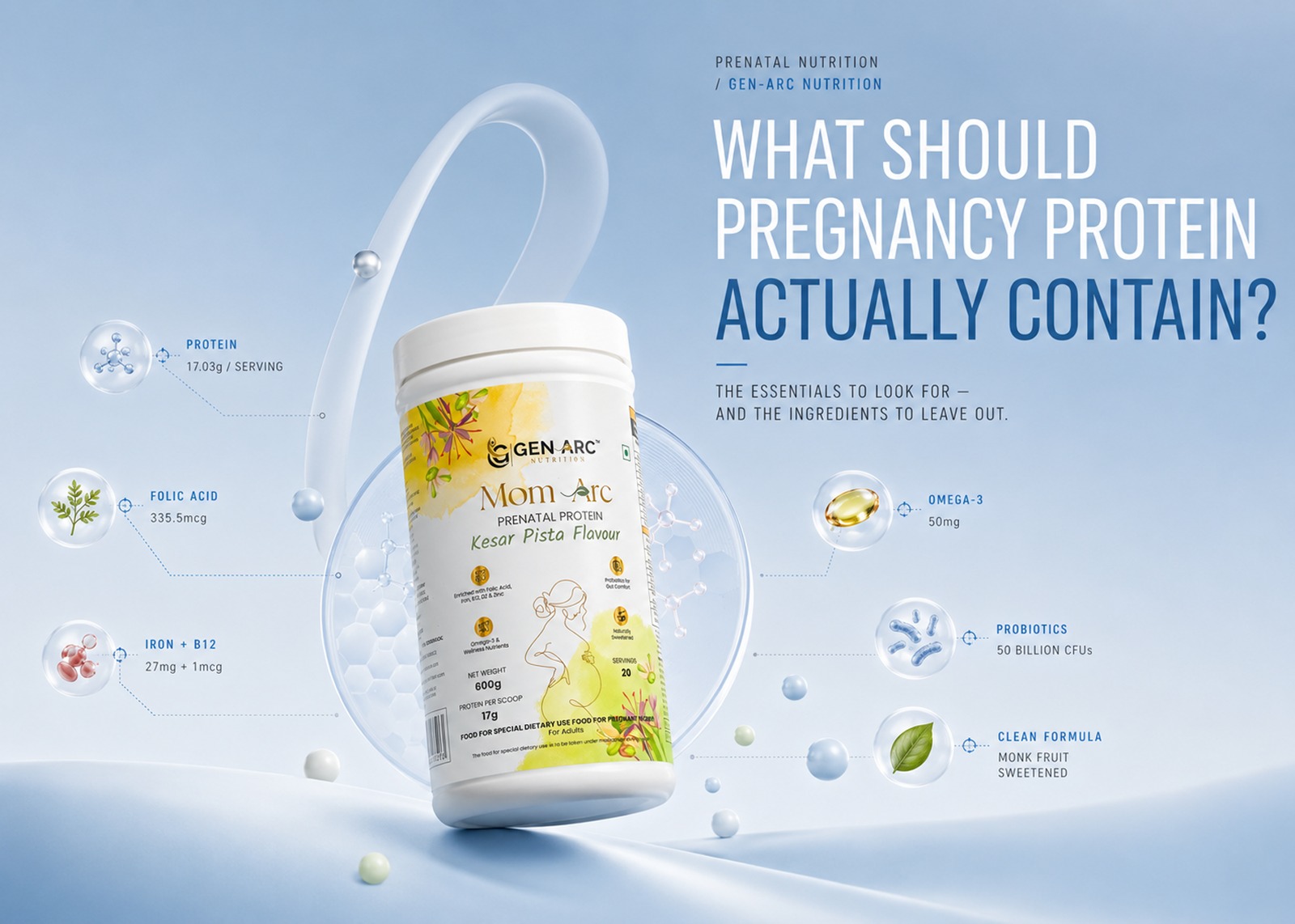
✓ 17.03g high-quality protein per serving — to close the gap between what most Indian diets provide and what pregnancy actually demands.
✓ 335.5mcg Folic Acid — supporting neural tube development, DNA synthesis, and cell production at every trimester and during breastfeeding.
✓ Iron + Vitamin B12 — directly addressing the anaemia risk that is highest among vegetarian pregnant women in India.
✓ 50mg Omega-3 — for fetal brain and eye development across the second and third trimesters.
✓ Calcium + Magnesium — for bone support, maternal muscle recovery, and postpartum health.
✓ 50 Billion CFUs probiotics — for gut comfort, reduced bloating, and digestive ease throughout pregnancy.
✓ Naturally sweetened with monk fruit — no saccharin, no artificial sweeteners, no unnecessary additives.
✓ FSSAI, FDA, cGMP, HACCP, and ISO certified — independently verified to the standards that matter for a pregnancy-safe supplement.
Available in Kesar Pista — a flavour rooted in Indian culinary tradition, naturally complementing the nutritional profile with warmth and familiarity. Backed by Ayurvedic principles. Designed to support not just pregnancy, but the full journey into motherhood.
Where whole foods can meet the need, they should. Eggs, curd, paneer, lentils are all valuable sources of protein during pregnancy — and building your meals around them is always the right starting point. But when the gap between what food provides and what pregnancy demands is real — and for most Indian women, it is — supplementing with a product built specifically for this stage is not overcautious. It is the intelligent, informed choice.
Medical Disclaimer: This blog is for informational purposes only and does not constitute medical advice. Nutritional needs during pregnancy vary by individual health history, trimester, and pre-existing conditions. Always consult your OB-GYN, gynaecologist, or a certified nutritionist before introducing any supplement during pregnancy or while breastfeeding. Mom ARC Prenatal Protein Blend is a nutritional supplement and is not intended to replace prescribed prenatal care or medical guidance.