“Detox your liver.” It is one of those wellness phrases we hear everywhere—especially after a period of drinking, eating heavily, travelling, or simply feeling like our lifestyle has been less than ideal. But there is a problem with the way we usually talk about liver detox.
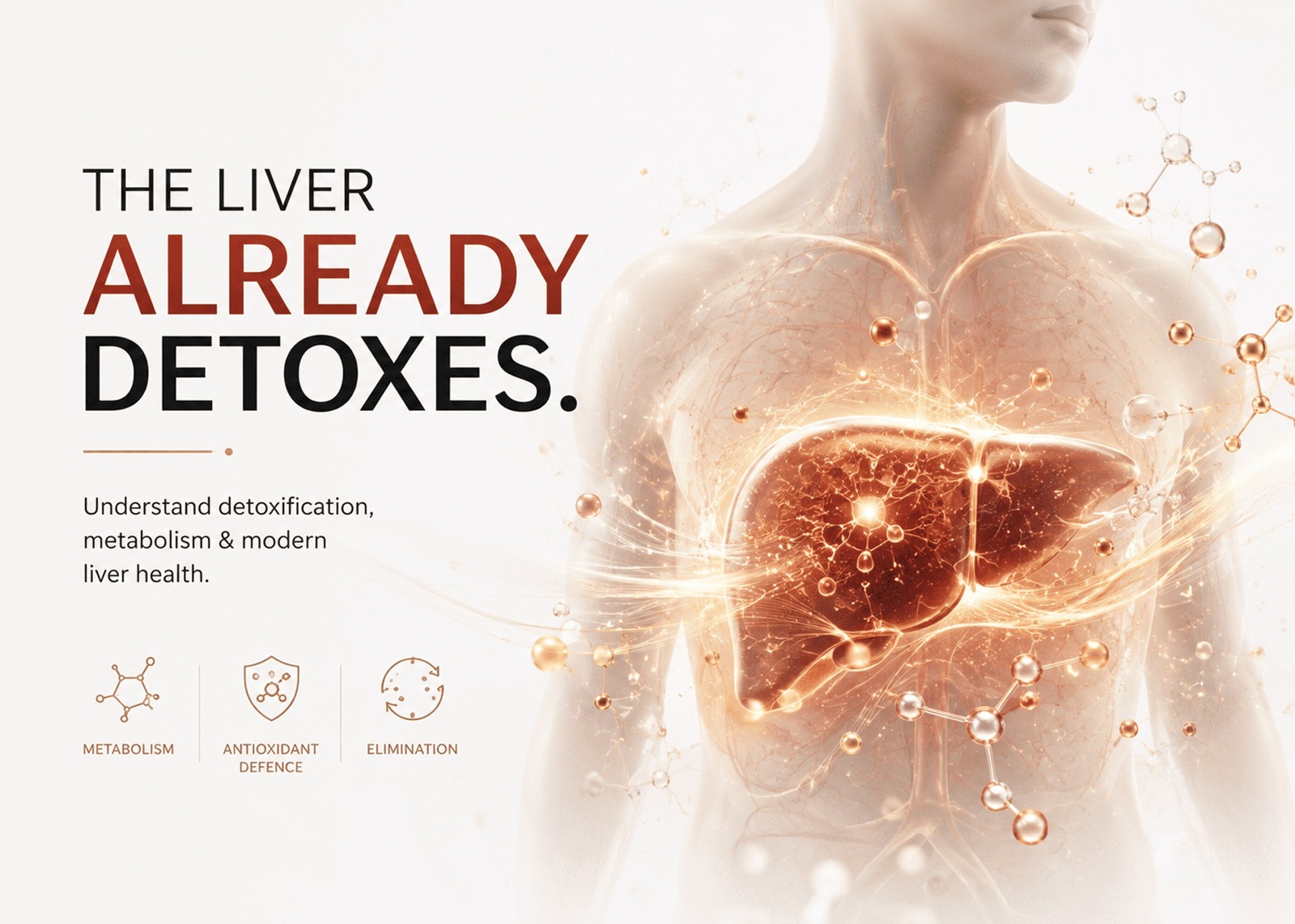
Your liver is already one of your body’s primary detoxification organs.
It doesn’t need a juice cleanse to start working. It doesn’t need to be “flushed”. And a supplement cannot simply wash away the effects of an unhealthy lifestyle. So, where does that leave liver detox supplements?
The answer lies in an important distinction: you don’t necessarily need to detox your liver; you may want to support the liver processes that are already doing the detoxification.
Your Liver Is Already Doing the Detoxing
The liver is involved in a remarkable number of processes that keep the body functioning normally. It processes nutrients, participates in metabolism, produces bile and helps the body process substances including alcohol and medicines.
The liver doesn’t detoxify the body in the way a water filter cleans a glass of water. There isn’t a reservoir of “toxins” sitting inside it waiting to be flushed out. Instead, detoxification is a continuous biochemical process.
Every day, the liver receives compounds absorbed from the digestive tract and processes substances produced by normal metabolism as well as compounds we are exposed to through food, alcohol, medicines and the environment. Many of these substances are not simply “removed”; they are chemically transformed so that the body can handle and eliminate them more effectively. And this is happening continuously—not as a special event after a heavy meal or a night of drinking.
The liver also has its own antioxidant defence systems to help manage the reactive molecules generated during normal metabolism. Glutathione, for example, is an important component of cellular antioxidant defence.
So, when we say that the liver “detoxes” the body, what we’re really describing is an ongoing network of enzymatic reactions, antioxidant systems, transport mechanisms and elimination pathways.
That is why the idea of periodically “cleansing” the liver is misleading. The more relevant question here is: How do I support an organ that is performing these demanding functions every day? When someone says they want to “clean their liver”, what they often really mean is something more sensible: They want to maintain a healthy liver and support its normal function.
That distinction matters because there is no magic reset button for the liver.
So Why Does the Liver Need Support?
The modern liver-health conversation has changed. Consider what a modern lifestyle can look like.
Long periods of sitting. Less physical activity. Frequent consumption of highly processed and energy-dense foods. Excess calories relative to energy expenditure. Poor sleep. Increasing rates of obesity, insulin resistance, high blood sugar and abnormal blood lipids.
These factors don’t produce an obvious liver problem overnight, but they can gradually alter how the body handles energy. This is where the modern concept of metabolic dysfunction-associated steatotic liver disease (MASLD) becomes important.
Recent findings from the Phenome India-CSIR Health Cohort, published in The Lancet Regional Health – Southeast Asia, analysed more than 7,700 adults across 27 Indian cities. Researchers found that 38.9% had MASLD according to the study’s age-adjusted prevalence estimate. Significant liver fibrosis was identified in 2.4% overall and was more common among older adults and people with diabetes or obesity.
That means fatty liver is no longer a niche concern associated primarily with people who drink heavily.
Alcohol continues to remain an important source of liver stress. When the liver metabolises alcohol, the process produces acetaldehyde and contributes to oxidative stress. Repeated or excessive exposure can overwhelm the liver’s ability to maintain normal cellular balance and, over time, contribute to liver injury.
The modern liver is dealing with a more complex issue. It is dealing with repeated metabolic demand, excess fat accumulation, oxidative stress and lifestyle exposures—sometimes simultaneously. This is where the idea of liver support becomes more meaningful.
The goal isn’t to make the liver detoxify faster than it already does. It is to provide nutritional and lifestyle support for the systems involved in normal liver function, antioxidant defence and metabolic health.
The Better Question: Can You Support Your Liver?
A liver-support supplement should not be thought of as a substitute for the liver’s own detoxification machinery. Nor should it be positioned as a treatment for established liver disease.
Think how to support the liver with ingredients that have antioxidant properties, botanicals traditionally used to support liver function, and compounds being studied for their potential roles in metabolic and cellular processes. Think of it less like cleaning a filter and more like supporting the system that is already doing the filtering.
What Should You Look For in a Liver-Support Supplement?
Milk Thistle
Milk thistle is one of the most recognisable botanicals associated with liver health. Its principal active complex, silymarin, has been studied for antioxidant, cellular and inflammatory pathways relevant to liver biology.
Punarnava, Kalmegh, Bhringraj and Kutaki
These Ayurvedic botanicals have a long history of traditional use in formulations intended to support liver and digestive health. Modern research has begun investigating some of their phytochemicals and biological pathways, including antioxidant and metabolic activity.
Tamlaki, Ginger and Black Pepper
Tamlaki is traditionally associated with liver and digestive support, while ginger has been extensively studied for its antioxidant and digestive properties. Black pepper is particularly interesting from a formulation perspective because its active compound, piperine, can influence the bioavailability of certain compounds.
Where Does a Liver Detox Supplement Fit into a Healthy Lifestyle?
A supplement should sit alongside healthy habits—not instead of them.
If alcohol is contributing to liver injury, reducing or stopping alcohol is the intervention that addresses the cause. No capsule can neutralise continued excessive alcohol exposure or make drinking safe for an already injured liver.
Likewise, if metabolic dysfunction is contributing to fatty liver, a supplement cannot substitute for improving the underlying metabolic environment. Current hepatology guidance continues to emphasise lifestyle modification as a cornerstone of MASLD management. That makes the practical liver-health routine surprisingly straightforward:
- Eat for metabolic health: Prioritise minimally processed foods, limit excess calories, refined carbohydrates and highly processed foods.
- Move regularly: Physical activity supports insulin sensitivity and metabolic health, even beyond its effect on body weight.
- Manage body weight: For people with overweight or obesity and MASLD, meaningful weight reduction can reduce liver fat
- Be honest about alcohol: Reducing alcohol exposure is fundamental to protecting the liver, particularly when liver disease or fibrosis is already present.
Then consider targeted nutritional support. That is where a liver-support supplement can have a logical place: not as a cleanse, cure or shortcut, but as an additional source of selected botanical and nutritional ingredients within a broader approach to liver health.
Gen-Arc Liver Detox Capsules: Support, Not a Quick Fix
Gen-Arc Liver Detox Capsules take this approach by combining Ayurvedic botanicals in a formulation designed to support liver function, antioxidant defence and the body’s natural cleansing processes. The formula includes milk thistle, punarnava, kalmegh, bhringraj, kutaki, tamlaki, ginger and black pepper.
The formulation is intended for regular use as part of a healthy lifestyle—not as a dramatic “reset” after a weekend of indulgence. A liver-support supplement isn’t there to do the liver’s job. Your liver already does that.
So, Do Liver Detox Supplements Really Work?
The honest answer is: it depends on what you expect them to do. If you mean supporting an organ that is constantly involved in metabolism, processing substances and maintaining the body’s internal balance, then the conversation becomes much more meaningful.
A good liver-health strategy starts with the fundamentals: a balanced diet, regular movement, healthy metabolic markers, responsible alcohol choices and appropriate medical care when needed. A thoughtfully formulated supplement can complement those habits by providing targeted botanical and nutritional support.